
Davao, known as the 3rd largest city in the entire country is the home town of the delicious fruit called durian and is wrapped in a tight embrace by the Davao Gulf. All tropical fruits come from Davao and this is also the center of all logging, agricultural and mining activities in Mindanao. Among the known Davao destinations include plantations, plywood factories, farms, black sand beaches and several resorts.
About 5 kilometers away from Davao City is the Shrine of the Holy Infant Jesus of Prague. Many say that the story of this Davao destination stemmed from a religious experience considered a miracle. As the story goes, the Shrine of the Holy Infant Jesus of Prague started with a dream that the Mayor's wife had. In that dream, there was a compelling force that urged her to go to Czechoslovakia and bring home a replica of baby Jesus. A shrine for that replica was built and it was thus named Shrine of the Holy Infant Jesus of Prague. Although this is not the only replica of Jesus brought back from Europe, the construction of this shrine has led to more replicas being brought to Davao and soon enough an entire complex of altars, chapels and seminar halls have been built in one big complex to honor these replicas. The Shrine of the Holy Infant Jesus of Prague is proof of the Filipinos' devotion to Christianity, the dominant religion in the Philippines.
However, the Shrine of the Holy Infant Jesus of Prague built in honor of Christianity does not mean that this is the only religion in Davao. In fact, Mindano has a large Muslim community and Muslim Village is found in Calinan. This Muslim village is in the list of Davao destinations and what can be seen here are not just towering mosques, this is a good place for shopping both for locally made products as well as clothes, bags and shoes.
Another Davao destination albeit about an hour from the city is the Aguinaldo Pearl Farm. Samal Island is where one will find the Aguinaldo Pearl Farm. This Davao destination as the name implies, is where the locals harvest pearl. Enclosed by a resort with a small hotel and a beach, many tourists flock to this Davao destination because this is where authentic pearls can be bought at far less than anywhere else in Manila.
Although the Philippines has mountainous terrains, approximately 14 percent of its 158,810 kilometer roads is paved. Wherever you may be, Philippines transportation is easy because of the different modes of transport at your disposal.
In Metro Manila as well as in the provinces, airconditioned and non-airconditioned buses are accessible. The cost of fare is much higher with the airconditioned variety. However, if your destination is located outside of Manila, you can avail of chartered bus lines.
The most popular means of transportation is the jeepney. These vehicles resemble those used by the Americans at the height of the Second World War. Like most buses, they also have a regular route and will stop when flagged down. The minimum fare is P7.00 per 4 kilometers and an additional 50 centavos for the succeeding kilometers.
Airconditioned taxi cabs are accessible in any part of Manila. If you want to travel by car, not in a taxi, there are car rental services also available but you need to have an international driver's license. If you are staying in a luxurious hotel, majority of them have limousine services that will take you to your desired destination.
Cheap and fast is what both the Light Rail Transit (LRT) and Metro Rail Transit (MRT) would give you. This is the preffered mode of transport especially by commuters who are going to their respective places of work. The MRT, for instance, traverses the commercial centers of Ortigas and Ayala Avenue.
The Philippine National Railways (PNR), which is government-owned is a viable option if you are traveling outside of Manila. The track stretches across 1,060 kilometers of the country. However, it can only service those going to Luzon provinces so if you are going to the other islands, the best option is to ride a ferry.
Another option for Philippine transportation is through the air since there are more than 40 provincial airports in the country. The Ninoy Aquino International Airport is just a kilometer away from the Manila Domestic Airport and is 7 miles from the heart of the city. The NAIA boasts of offering several amenities such as a medical clinic, banks, and postal service along with duty-free shops, among others.
Seventy five of the total 262 airports in the country have paved runways. The Philippine Airlines is the country's national carrier with flights connecting to 12 cities in 7 countries. On the domestic front, PAL has daily flights to 17 local cities. Likewise, when traveling to smaller locations, you can choose among Cebu Pacific, Asian Spirit, Mindanao Expres, and SEAir.
Waterways and seaports in the country stretch 3,219 kilometers. There are various shipping companies connecting Manila to other major ports in the country. The busiest seaports are located in Manila, Iloilo, Davao, Cebu, Zamboanga, and Cagayan de Oro.
Traveling to your desired location is very easy with these Philippines transportation options.
Davao’s hotels include many types from the lavish to the mundane and they are considered as one of the city’s important economic sources. People from all parts of the Philippines visit Davao’s hotels in order to see its famous exclusive and ordinary hotels and dine in its fine restaurants.
The hotels of Davao are among the fastest growing economic sectors in the city. In fact, Davao hotels by themselves are recognized as multi-million peso and still a progressing business in Davao. The hotels of Davao are among the major economic forces in the city as its enables growth and creation of job opportunities.
The hotel business in Davao has employed over a thousand workers who are distributed within various Davao hotels, totaling a revenue generation of billions of pesos. From recent records, the hotels of Davao have indeed become one of the most competitive businesses in the Philippines.
In spite of the increasing popularity of these hotels as an urban tourist destination, certain hotel business issues affect the influx of tourists and the revenue acquired from this business. The problem in competition for example, is one of the growing concerns of the hotel business in Davao. Fierce competition happens among the best and well-known hotels, such as Davao City Hotel, Apo View Hotel Davao, Marco Polo Hotel Davao and Insular Century Hotel Davao.
In addition, customer satisfaction is one of the highly significant priorities in the business. Being the major source of tourism revenue, the hotel business owners of, for example, the Waterfront Insular Hotel Davao, Davao Galleria Hotel and Davao Grand Regal Hotel are applying various strategies that will enhance the experience of visitors coming to the city.
One of the main issues relevant to the need of assessing service quality is the significant transitions that Davao’s hotels must undergo. One of the recognized changes was the transformation of its first class and ordinary hotels. The once conventional hotels were converted into modernized ones. This transition implies the apparent increase of small firms providing tourism services at present, while the first class and ordinary hotel business in Davao used to be dominated by a few producers.
In other words, the hotel owners in Davao now have a number of accesses to strategies and factors that amplify business competition. While this tendency has in many ways improved the overall state of the hotel business of Davao City, hotel owners also encounter difficulties to operate their businesses successfully, making the evaluation of service quality all the more essential.
Hotel owners have also stated that the competition in the hotel business is augmented by new strategies introduced and implemented by various hotels. With the introduction of information and communication technology (ICT) in some of Davao’s hotels such as Davao City Hotel, Apo View Hotel Davao, Marco Poo Hotel Davao and Insular Century Hotel Davao, and the inclusion of other technological facilities, tourists have more options and control over they type of hotels they want to stay in.
Hence, with the present advancements, first class and ordinary hotels in Davao are giving more importance to specialized and enhanced forms of services for tourists, especially the service quality in these hotels.
[Tags]Davao, Philippines, Tourism, Mindanao, Davao Hotels, Service, Restaurants[/Tags]
Laoag City is considered as the industrial, commercial and political hub of the Ilocos Norte. As the capital city if Ilocos Norte, Laoag City has been the center of the fast progressing North Luzon Economic Triangle among noted neighboring cities. The 'Laoag Ecozone' has bolstered the commercial status of the city thus becoming one of the first-class cities in the Philippines. Laoag City’s accessibility has been one of the major factors that led to its economic progress because it opened opportunities for investors to establish their business ventures, which generated jobs for the locals of Laoag City. Thus, Laoag City has been a symbol of economic progress and immovability in the northern part of the Philippines for which, it opened an avenue for neighboring municipalities and towns to be competitive and assertive in terms of improvement.
It is undeniable that tourism played a major role in the growth of the city of Laoag. For this reason, Laoag International Airport has been operational to keep up with the pace of the growth of tourism. Tourism has been the economic driver of the city as it paved way for the transportation improvement and commercial ventures. Fort Ilocandia Hotel and Resort is the only five-star hotel in the northern part of the Philippines. Heritage sites is flourishing around the city’s vicinity featuring Spanish colonial edifices, Philippine-rococo (baroque) churches, the mansions during the Marcos regime and of course, who would ever resist the white-sand beaches of Pagudpud. Due to the remarkable and impressive increase in tourist influx, some foreigners established consulate to oversee their citizens residing and staying at Laoag City.
The influx of tourists prompted the local government of Laoag to push further beyond what is expected of them. City improvements everywhere have been prevalent to maintain its tourism edge. To provide this type of quality service, travel agencies offer package for tourists and visitors alike to help them enjoy the wonderful city of Laoag. One of the noted travel agency is the Aboex Travel and Tours which has an office in Manila and especially in Laoag City. They offer passport processing down to document legalization, authentication and translation. Talking about complete package, they have it all. Having this kind of travel agency would definitely encourage visitors and especially foreign tourists to have a hassle-free stay and would most likely stay longer and put up a business, and then again, generate jobs for the growth of this city.
Makati City is the National Capital Region’s and the Philippines’ business center since it is the home of the headquarters of the many of the country’s largest businesses. It is for this reason that the number of Makati transportation options has also increased to meet the needs of the public.
When traveling between nearby cities in the Metro Manila and in the Philippines, the jeepney (or jeep) is the fastest mode of transportation. Jeepneys come in different colors and in sizes ranging from 3-4 meters in length, 1.5-2.5 meters in width and approximately 2 meters in height. When the jeepneys were introduced after the World War II, they were made from the leftover US military jeeps. At present, several local manufacturing companies build the jeepneys mostly according to the preference of their client.
In Makati, in addition to the ordinary (open-air) jeepneys, there are also specialized jeeps that have an air-conditioning system and decorative designs. Most of these special jeeps just take passengers to different stops within the city of Makati. Finding a jeep in the Philippines on ordinary days is not difficult since jeeps ply their route almost anytime of the day. While riding a jeep, if you would like to ask the driver to drop you off, just say “para po” (please halt). However, if you are in the Makati Central Business District, jeepneys can only halt at the designated jeepney stops.
For long-range travel within the National Capital Region, buses are the most appropriate mode of transportation. In Makati, buses may be found on Epifanio delos Santos Avenue (EDSA), on Ayala Avenue, on Buendia Avenue and on Makati Avenue. Buses in Makati can take to the northern cities (going to Novaliches and Quezon City), southern cities (going to Baclaran and Alabang) and western cities (going to downtown Manila).
Because buses can sometimes get caught in the heavy rush hour traffic, the Light Rail Transit and Manila Metro Rail Transit are convenient alternatives to the buses on EDSA and on Taft Avenue. The LRT on Taft Avenue runs from Monumento (in the north) to Baclaran (in the south). Its closest station to Makati is found on Buendia, which is a major road going to the Makati Central Business District.
On the other hand, the MRT found on EDSA travels from North Station (in Quezon City) to Taft Avenue, where there is a footbridge link to the LRT.
A portion of Makati is bordered by the Pasig River, which runs through several cities in the Metro Manila. The Pasig River Ferry is an air-conditioned boat with a capacity of up to 150 passengers. Makati has two Pasig River Ferry stations namely the Valenzuela station and the Guadalupe station.
In addition to the mentioned modes of public transport, Makati also has tricycles (motorcycle with a side car) that can take their passengers into the villages and right in front of their homes. Taxis are also found on most of the roads in Makati.
World renowned Philippine sticks martial arts called Arnis de Mano (literally, “harness of the hands”) is still looking for who actually founded it. Popular in Asia, America and Europe especially today, Philippine masters still debate how it started.
There are various versions of the origin of Arnis (or sometimes called Eskrima or Kali), but most seem to agree that it evolved from the sophisticated arts of China—specifically from the Shaolin Temple.
Many writers have attempted to chronicle the history of Filipino Martial Arts and intimated that Arnis was brought here from different parts of Southeast Asia by different Filipinos with different styles.
One tale goes like this: Long ago Chinese trade vessels docked at the port of Binundok (Binondo), a hilly part of pre-Hispanic Manila. Not far away was a Chinese settlement where Chinese Expats who liked the island lived. Here, an islander, Botho Pula, worked for a Chinese businessman.
Well, before he worked for the Chinese he had a quarrel with him. The Old Chinese easily beat him in the fist fight. To cut the story short, he agreed to work for free as a sign of penitence.
Before long, the old man saw Pula’s loyalty and took him to visit China. Pula eventually ended up studying in the Shaolin Temple. But in the Ming Dynasty, the temple was burned down by the Manchus and the temple monks massacred. Those who survived, Pula among them, were in hiding. The old Chinese was not as lucky.
Pula managed to find his way back to Manila passing through different Southeast Asian countries, taking in several stick fighting styles as he did—Indonesia, Thailand, Borneo, Malaysia, and finally, the Philippines.
From Kuta Kinabalu in Malaysia he landed first in Mindanao and worked his way to Manila from there, imparting the sticks arts he formulated to many natives on the islands. Later, a school of fighting arts in Mindanao was named “Bothoan.”
The natives each had different versions of what he taught them, owing much to different word meanings in their different dialects. Back in Manila, he taught the art to some natives of the North before he finally died.
When the Spanish conquistadores came to the Philippines years after Pula’s death, a cultic group of fierce and highly skilled warriors in the Visayas gave the Spaniards a real pain in the neck. They called themselves the Pulahanes.
Philippine Arnis art still remains fatherless except for some far-fetched claims such as tales like this. Yet, it remains part of the country’s proud heritage and among the deadliest fighting arts in the world.
Nobody really knows Subic Bay that well because it’s only recently that tourism in this part of the country picked up. Because there isn’t much information on Subic Bay destinations, many tourists hesitate to go here thinking there’s little to see for visitors. Contrary to such thinking though, there are wonderful destinations that once visited will change how one looks at this place.
Gaining popularity among children and adults is the Zoobic Safari, a zoo unlike any other in the Philippines and comparable to the really famous ones in Asia such as the Night Safari in Singapore. 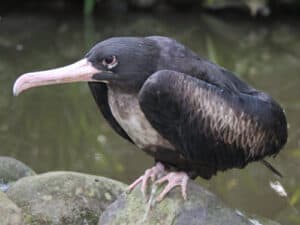 There’s just something about animals that touches a soft spot among adults and especially children and Zoobic Safari offers that once in a lifetime opportunity to see and understand these creatures. Among the attractions at this Subic Bay destination are the Aeta’s Trail, where interaction with the indigenous group Aetas can be made as well as a chance to see their way of life, the Croco Loco, which is an encounter with adult and baby crocodiles in their natural environment, the Serpentarium and the Savannnah to name a few. There is even a museum at the Zoobic Safari called the Animal Muzooeum which is educational as it is a chance to learn about the evolution of animals.
If one feels that a day at the Zoobic Safari is not enough, the good news is that there is a hotel at this Subic Bay destination called the Zoobic Lodge at Tiara. This small hotel found about 20 minutes away from the Zoobic Safari has first class amenities and provides excellent customer service and they make it a point that their guest’s stay is truly memorable.
Another interesting Subic Bay destination is the Bat Kingdom which has over a thousand bats that has made it its home. The biggest type of bat known as the Fruit bat can be found at the Bat Kingdom as well as the smallest of them all named Bamboo bats. This Subic Bay destination is very accessible from other tourist spots and public transportation so dropping by shouldn’t be a problem. The Bat Kingdom charges an entrance fee of Php 100 for adults and Php 70 for children. The other known tourist destinations that can be found near Bat Kingdom are the Subic Golf Course, Subic Park Hotel and the Apaliin Trail. The Bat Kingdom also has a small souvenir shop inside where you can stock up on trinkets.
So you think only women are vain? Think again. I just found out that men can be as prissy with their looks like women are. And the good news is, an enterprising person can take advantage of this turn it into a home business. How? By opening a barber shop!
The following is a Q&A with a barber who opened up a barber shop to response to this sense of aesthetic and call for business venture.
Q: What made you decide to have your own barbershop?
A: Even while I was still in school, I would also find its way to fix my hair differently especially when I had to attend parties or gatherings. The problem then was that in order for me to get the “fix” I wanted, it was either I would do it on my own or go to the beauty salon. In the case of the latter, I sometimes felt awkward being in what is supposed to be a woman’s world. So, I decided to set-up my own barbershop to answer this “need.” And it turned out that aside from being able to get the haircut I want, I am able to earn additional income as well.
Q: So how profitable is this business?
A; Well, it really is profitable. Haven’t you noticed the number of barber shops that have lined up the streets of the city or even in rural areas? Barber shops open up like mushrooms just like beauty parlors do. It only shows that you can earn quite a good sum of money from this business. Besides, it is not really difficult to manage one.
Q: How did you start?
A; The good thing in my case is that I did not have the problem looking for a location. I simply used the space available in front of my house which makes the barber shop a true-blue home business. Then I started to get the shop fixtures I needed, particularly the barber’s chairs while I had the shop furnished and designed. It was important for me that my shop looked unique despite my loyalty to the traditional interior and exterior design of a barber shop. I made sure my barber shop stands out among the rest. Then of course I had to scout for good barbers. It was not hard because as soon as news of a new barber shop opening spread, barbers started applying. I got the best ones.
Q: How much capital did it cost you to start the home business?
A: Well, let’s just say around P150,000 including the carpentry work. The chair alone cost me around P7,000 each. It would be more if you still have to consider a rental fee which isn’t my case since I own the space.
People have varying peculiar taste preferences depending on the taste preference of their country of origin. Some go for hot and spicy foods, some for bland, some for salty. But while an expatriate in these parts, it’s not only worthwhile but sometimes necessary to try out native dishes when one finds oneself in the Philippines. It is often deemed an offense to turn down invitation to taste or eat a native delicacy.
So what do we do?
One of the challenges of the expatriate life is what foods are safe to eat. All native foods are relatively safe, of course, but there are those that don’t mix well with some foreign digestive systems. And when some incompatible chemistry builds up in this, expatriate life becomes sour, to say the least. So here are some tips for choosing safe foods for expatriates.
If one wants to avoid extremely exotic foods (and this is often the case), safe food for expatriates would be a chicken, egg, pork, or beef menu. One can safely try beef or pork Caldereta (spiced beef or pork in melted cheese), vegetable or ground beef or pork omelets, “Sinigang” (pork or beef sour soup with vegetables), “Menudo” (pork and liver cubes in heavy tomato sauce), “Adobo” (spiced pork or chicken), or “Apritada” (beef, pork or chicken with potato and chili in tomato sauce). They’re not only safe foods but very delectable to make any expatriate’s life like heaven on earth.
Watch out for pork dishes like “Binagoongan,” “Pinakbet,” “Dinakdakan,” and “Kinilaw.” The first two are cooked with preserved fish or shrimp; the other two are often not well cooked---even raw---but taste good enough for one to think they’re cooked.
Hot or spicy safe foods for expatriates: “Bicol Express,” “Bopis,” “Paksiw,” “Mechado,” “Sisig,” and “Ginataang Sili.” These are all well cooked pork or beef cuisines that would brighten an expatriate life anywhere in the archipelago. Bicol Express is crunchy pork and long chili servings in thick coconut milk, and Paksiw is roasted pork cooked in rich and thick liver sauce (there’s a fish variety with long chili cooked in vinegar). Mechado is tender beef loin with chili in very thick and rich tomato sauce, Sisig is super hot meat or fish flakes, and Ginataang Sili is chili cooked in coco milk.
For bland tasting native dishes, foods safe for expatriates are “Pangat” and native sautéed vegetable dishes. Pangat is fish boiled in tomatoes. If one goes for sandwiches, native rice cakes will suffice.
Expatriate life need not be spoiled by worries about safe foods. Ample varieties of native foods safe for expatriates line up menus.
The “Pearl of the Orient Seas” has long since relied on ecotourism as a revenue generating industry and it didn’t have a hard time going about it because of the many beautiful Philippine destinations that await the visitor. Which Philippine destinations to see when in the country is a tough decision to make but here are some places that are definitely worth seeing.
Banawe Rice Terraces
One does not have to be a farmer to be able to appreciate the beauty of the Banawe Rice Terraces found in the mountain region of the Philippines. The land of the Philippines is well suited for agriculture and rice being a part of every Filipino’s diet is very important to the locals. The Banawe Rice Terraces can be seen in many postcards about the Philippines and that in itself is enough to prove the majesty of this Philippine destination. A whole mountain that goes as far as the eye can see have been converted by the indigenous group in the area into a massive rice plantation and in so doing they followed the contour of the mountains. The indigenous group responsible for the wonder of the Banawe Rice Terraces is the Ifugaos and they have made sure that the rice lands are well irrigated. Lacking formal education, the Banawe Rice Terraces shows the Filipinos’ ingenuity, determination and strength.
The Philippines’ tropical climate can be very warm and humid between the months of March until early June. A great Philippine destination to visit if one is in the country during the summer season is Baguio City. Dubbed the “Summer Capital” of the Philippines, Baguio City has perpetually cool climate because of its location. Baguio City belongs to the Cordillera Mountain Ranges and there are several tourist spots at this Philippine destination. The famous tourist destinations in Baguio City are Camp John Hay, Burnham Park and Session Road. This Philippine destination is also home to beautiful flowers such as roses that thrive only in cold weather and if should chance upon the Baguio City Flower Festival while here, one is definitely in for a treat.
It’s not only foreign visitors that get to enjoy Baguio City. In fact, this location is frequented by locals because of it is relatively near Metro Manila. Tourism is at an all time high though at this Philippine destination during the summer season and during the Flower Festival. During the Flower Festival, one gets to watch beautifully decorated floats filled with flowers parading the streets, showing the Filipinos’ creativity and passion for beauty.