
Baguio has been dubbed the “Summer Capital” of the Philippines because it is the only place that is saved from the intense heat during the months of February to early June. Baguio is accessible 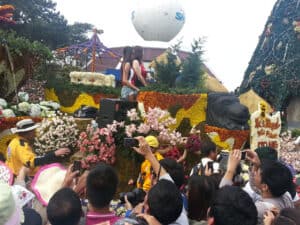 by land from Manila by bus ride of about 6 hours. Of course, one can also opt to bring one’s vehicle to make going around Baguio easier but if that is the main concern, rest assured there’s plenty of public transportation there. Baguio is also accessible by air. The best time to go to Baguio would be when festivals such as the Kadayawan Festival and the Baguio Flower Festival are celebrated.
One of the reasons that people go to Baguio is to watch the Baguio Flower Festival called Panagbenga. Because of the cool climate in Baguio and the rich topsoil, there are a lot of flowers that grow here that would normally not last a day in Manila. During the Baguio Flower Festival, a parade is held along Session Road of the most beautiful and uncommon flowers which are uniquely designed and placed on mini stages. The fragrance of the flowers as they pass by is heavenly and visitors line the street snapping pictures of the parade.
Panagbenga is an event of its own and one of the reasons that tourists visit Baguio. The Baguio Flower Festival began in 1995 when the then Director of Camp John Hay spearheaded the project and solicited the support of the different sectors of the community.
Today, it is organized annually and has become a major tourist attraction in the city. History The first Flower Festival was only for three days. It was held at Camp John Hay with the aim of celebrating the flowers of Baguio. The Baguio Flower Festival is now an annual event and is held every year around February.
To watch the Baguio Flower Festival will not cost anything and it’s loads of fun. The community comes alive with dances, colorful outfits and the participants spend days preparing their designs. The goal of the Baguio Flower Festival is to increase awareness on the need to preserve the environment.
The Kadayawan Festival is another event that plays an important role in increasing tourism in Baguio. The local government units take part in the Kadayawan Festival by participating in dances 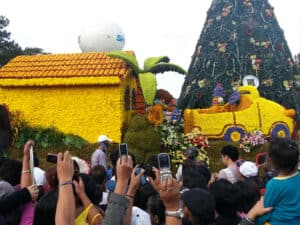 known as Indak-Indak.
In the town’s main plaza, a stage has been set up and a crowd of about 10,000 people has gathered to listen to a group of musicians and dancers perform traditional dances from various parts of the Philippines.
This 19 year old festival is made colorful each year with new segments being added. From the very first time that the Kadayawan Festival was celebrated, it has undergone a lot changes and now there are more dances, there is now a festival hymn and the tribal community also participate.
The Kadayawan Festival is Baguio’s way of showing the world that no matter how different the Filipinos may be, they stand united.
There are many Tagbilaran festivals that are celebrated only here and no other region or province in the Philippines. These Tagbilaran festivals are unique to the locality because of its historical significance.
The Ubi Festival is held for five days during January and this event somewhat extends the festivities of the Christmas season. This Tagbilaran festival is celebrated mid January from the 15th to 19th and this is a farmer’s feast where they showcase their primarily grown product ubi or purple yam. During the Ubi Festival, the by products of the purple yam are showcased from wonderful desserts such as cakes, pastillas and pies to dishes where the purple yam is used. This Tagbilaran festival though is more than just about showcasing a homegrown product. The purple yam is considered as a holy crop because of how resilient it is to many natural disasters and farm pests. During the Ubi Festival, the children of farmers are taught that this God given crop is something that should be appreciated and they are even taught to kiss this if it falls to the ground. The Ubi Festival showcases the many products that can be produced out of this crop and the ingenious ways of doing it. Many visitors flock to the province to see this Tagbilaran festival because this is also an opportunity to purchase purple yam and its by products at an incredibly low price. The Ubi Festival is indeed unlike any other Tagbilaran festival.
Another really popular Tagbilaran festival is the Sandugo Festival and it has its roots deeply embedded in the history of this region. Translated in English, the Sandugo Festival means the Blood Compact Commemoration and this is a landmark event that symbolizes friendship between Datu Sikatuna and the Spaniard Miguel Lopez de Legaspi. This Tagbilaran festival used to just be celebrated for a whole month in July but over the past 2 or 3 years, the celebration has been extended well into August. There are many events and competitions that are held during the Sandugo Festival and it includes cock fighting, sports competitions as well as street parades. During the parades at the Sandugo Festival locals dressed in colorful costumes represent both the Spaniards and the tribe of Datu Sikatuna and there is re-enactment of the blood compact. Every night visitors and locals dance to Filipino bands performing and there are always firework displays at the Sandugo Festival.
There are many things that add to and represent the vibrancy of Cebu but none of them as colorful as the various Cebu festivals held annually. With centuries of different beliefs and being the melting pot of cultural diversity, Cebu festivals are more than just fun activities to participate in or watch, these events are also enlightening.
There is no Cebu festival that is as famous as the Sinulog Festival. Held every third day of January this Cebu festival is in honor of the patron saint of the province, Santo Nino de Cebu. The Cebuanos’ faith in their religion is something that has remained a constant despite the end of the Spanish occupation of the Philippines. Basically, the Sinulog Festival is a step back in time to when the province was converted to Christianity. In honor of the patron saint, several parades are held during the Sinulog Festival and dancers dressed in colorful costumes dance to the rhythm of drums and other musical instruments. It’s hard not to get carried away with all the spirited dancing during this Cebu festival. The Sinulog Festival is celebrated for 9 days and on the last day, the grandest parade is held that starts off very early in the morning. The Sinulog Festival would not be complete without including the Santo Nino de Cebu in the parade adorned with candles, flowers and other relics. This Cebu festival starts in Mandaue with Basilica as the ultimate destination.
The next Cebu festival on the calendar is the Marawi Festival which happens in May. Marawi Festival is held in Mandaue and this is really a celebration of Cebu’s past and the crucial role that it played when Magellan first landed here. Parades and street dances are common during the Marawi Festival but in addition to those, plays and dramas are also held. The theme of these plays is historical events and by watching it, one will get to learn about the history of this province and understand the importance of it. During this Cebu festival, figures from Cebu’s myths and legends are on display in floats that parade around the city. The Cebuanos works on these creative designs for months on end prior to the Marawi Festival. At the end of the Marawi Festival, the grandest fireworks display illuminates the night sky. There really is no better way to end a whole day of reminiscing and celebration than by watching the fireworks display at the end of a very well organized Cebu festival.
Legazpi is the center of socio-economics in the province of Albay and it is the one with the biggest population. Legazpi has the advantage of having a geographical core and it is no surprise that Legazpi festivals are held here. Most of the Legazpi festivals are held in honor of their patron saint or as a tribute to its rich cultural heritage.
Strictly speaking the Magayon Festival is celebrated by the entire province but it is held primarily in Legazpi City. The word ‘magayon’ literally means ‘beautiful’ and this Legazpi festival has been rightly described by its very name. The Magayon Festival is not something that has been celebrated for a very long time, in fact it was first celebrated in 1998 as part of the governor’s effort to increase tourism in Albay. The province of Albay is primarily Catholic and during the Magayon Festival, Catholic traditions are primarily what are showcased.
Aside from the religious aspect of the Magayon Festival, this event is also ingested with Bicolano culture. There is a cooking competition held during this Legazpi festival that draws contestants from the entire region and the theme of this contest is local delicacies. For those who are not aware, most Bicolano dishes are prepared with chili and coconut milk. Among the other events held during the Magayon Festival are marathons and an eco-camp that focuses on increasing awareness of the need to protect Bicol’s environment.
Held every October for 6 whole days, the Ibalong Festival celebrates the myths of Legazpi before the Spanish colonizers arrived. Apart from the myths, this Legazpi festival also showcases how resilient the inhabitants of this region are. The main event of the Ibalong Festival is the choreographed dances in the street prepared by high school students. There are other merry making activities during this Legazpi festival including street parties, drag races, concerts and the night always ends with a magnificent fireworks display. For those who like shopping, during the Ibalong Festival, the flea markets here also take center stage and here handicrafts can be bought as well as other items such as clothing and accessories. During the Ibalong Festival, the culture of the Bicolanos come shining through and the liveliness of the event is something that most visitors can’t resist. This Legazpi festival takes place in Albay with the Mayon Volcano and its perfect cone as the background. The Ibalong Festival allows the locals to remember times long gone and the tourists to learn the heritage of this region.
Summary: The Bicolanos have a rich heritage and they are considered as one of the most resilient. Every year, there are Legazpi festivals that are much awaited and these are the Ibalong Festival and the Magayon Festival. During these Legaspi festivals, everyone takes a step back in time to significant historical events and a lot of merry making happens to celebrate what the city has become over the centuries.